Navi Mumbai Property Market Will Triple in 5 Years Says Raajesh Prajapati
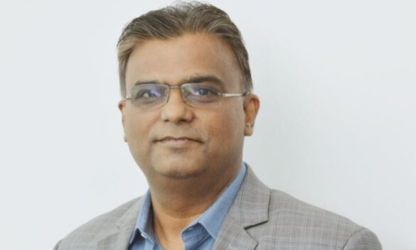
In an exclusive conversation with dailynewsandtrends.in, Prajapati Constructions MD Raajesh Prajapati shares powerful insights on Navi Mumbai’s transformation, the impact of Navi Mumbai International Airport (NMIA), the philosophy of Affordable Luxury housing, and why trust and engineering quality remain the backbone of successful real estate development.
Featured at : DailyNews&Trends
Navi Mumbai is no longer just a satellite town; it is the new epicentre of the Mumbai Metropolitan Region (MMR). In this expansive dialogue with dailynewsandtrends.in, Raajesh Prajapati, Managing Director of Prajapati Constructions Ltd and Founder President of Credai BANM & Credai MCHI Raigad, takes us through the journey of a city that grew from a city of “compulsion” to a city of “choice,” the engineering ethics of “Affordable Luxury,” and the spiritual discipline required to thrive in the high-stakes world of real estate.
From Mahim to Panvel: A Personal Exodus
Navi Mumbai is growing rapidly. You’ve seen this landscape change over decades. How do you view the market in the next three to five years?
To understand the future, we must look at the roots. The growth of Navi Mumbai isn’t just a trend; it’s a reality rooted in shifting geography and infrastructure. I always say this, and it is an important statement I make every time: From a city of compulsion, Navi Mumbai has grown into a city of choice.
Earlier, even for me, there was a compulsion. Our family had to migrate from Mumbai to Navi Mumbai. We used to stay in Mahim. Due to my father’s untimely death and the subsequent collapse of our business, we had no choice but to seek a new address. Navi Mumbai was the only choice because it had low-cost housing at that point in time. We could sell our flat in Mumbai, buy a partly built bungalow in Panvel, and still save some money to restart the business.
In 2002, during a press conference, I foretold that in a couple of decades, the prices of properties in Navi Mumbai would be somewhat equal to or even overtake the prices of properties in Mumbai. At that time, people were skeptical. But look at it now. Places like Palm Beach Road, Nerul, and Kharghar are seeing property rates in comparison with Mulund, Vidya Vihar, and even Thane. My 2002 predictions are turning out to be true.
The Impact of NMIA and Infrastructure
With projects like the Navi Mumbai International Airport (NMIA) and MTHL, how massive will the demand be?
The infrastructure has taken a big leap. Beyond the airport, you have the Metro, new freight corridors, and highways being built. I am a firm believer that there will be a huge demand for housing. When I say “Navi Mumbai,” I am not just talking about Vashi or Belapur. I am talking about the expansion into Panvel, Taloja, Dronagiri, Pushpak Nagar, and the NAINA area.
I predict we will see at least three times the current annual sales happening in the next five years. The velocity of sales will be huge. People are attracted to the vast planning, the open gardens, and the fact that about 95% of the population here is educated. It has become a futuristic hub for universities and malls. The “law of karma” applies to real estate too—what the government does now in terms of infrastructure will determine the destiny of this market for the next fifty years.
Defining “Affordable Luxury”
Many developers claim to provide luxury. What is the Prajapati version of this?
We have always worked toward one philosophy: Giving luxury housing at affordable rates. We call it “Affordable Luxury.”
Even if we build a tower consisting of 1BHKs, we provide international-grade amenities. About ten years ago in Dronagiri, we launched a project called Prajapati Magnum. We could have just made a “1 room-kitchen” building and sold it. Instead, we built 2 / 3 Bhk flats, a one-and-a-half-acre podium. It has an amphitheater, a multipurpose court, a jogging track, and four different types of swimming pools in one area.
We want to make projects that people will remember for a long time. People should stay and enjoy that project for generations to come. It shouldn’t just be a shelter; it should be a tool for wealth creation apart from being a dream home for the buyers.
Engineering Excellence: The “Bones” of a Building
You often speak about the technical integrity of your buildings. Why is that your main focus?
The bones in our body make us strong; similarly, the RCC (Reinforced Cement Concrete) makes the building’s life strong. We put a lot of effort into ensuring 100% excellent water-proofing. We check bathrooms, terraces, and swimming pools for leakages two or three times before handing them over.
I remember a story regarding this. A customer came to buy a flat through a referral. I only had a terrace flat left. He was hesitant and said, “Terrace pe leakage hota hai” (Terraces always leak). My old customer, who had brought him there, immediately interrupted. He said, “I have been living in a Prajapati terrace flat for years, and there is not a single leakage.”
He then pointed something out to us that we hadn’t even consciously advertised. He said, “Look at all the buildings in Panvel—most have sheds over the terrace to stop water leakage. But in Prajapati’s buildings, not a single one has a shed.” We did a survey and it was a fact! We use the best quality electrical wires, the best faucets, and maximum thickness for glass panels. These aren’t “showy” things, but they provide value for money over decades.
The Pain of Approvals
What is the biggest challenge for developers today? Is it the cost of materials or buyer sentiment?
Buyer sentiment is not the problem. For the next 20 years, there will always be more buyers than flats because of increasing salaries and migration. The real “pain point” is approvals.
The government suddenly changes systems and rules, some with retrospective effect. You start a project under one set of rules, and by the time you reach the 11th hour, you’re told a new authority like NAINA or MMRDA has taken over and you must redo all your legwork. It is a pain for both big and small developers.
We need a “forward-looking” system. If you want to change a rule in January, please implement it from June may be 6 months later so we can plan accordingly. Don’t say in January that the rule changed last October! It makes the cost & time of approvals go through the roof, and that burden eventually falls on the homebuyer.
The Referral Legacy
In an era of RERA and cautious buyers, how do you build genuine trust?
Trust starts the moment a customer enters the office. If they come at 11 AM and find the desk empty, that’s a trust deficit. We believe in total transparency. Whether the news is positive or negative, we keep the buyer informed. If there’s a problem, we tell them, “This is the issue, and this is how we are solving it.”
The best parameter for trust is the “secondary market.” Usually, you find flats for sale through brokers. But you will rarely find a Prajapati flat on a broker’s list. Why? Because if someone in our building wants to sell their flat, ten other people from the same building will rush to buy it for their relatives or cousins. They won’t even let the flat go to an outsider! That makes us very happy. We deliver projects on time, every time, regardless of the market—whether it was the political turmoil in Hyderabad or the Satyam debacle, we never left our projects incomplete.
Managing the Stress of Real Estate
Real estate is notoriously stressful. How do you personally manage the pressure?
Stress comes when you try to carry out a project of 2,000 flats when you only have the capacity for 100 flats. We work hard, but we stay within our limits. Success doesn’t carry us away, and failure doesn’t bog us down.
I follow a philosophy taught by my Guruji, Master Choa Kok Sui. I compare life to a gas stove with five burners. The first four are Health, Family, Business, and Social Life. Most people forget the fifth burner: Spiritual Growth. If you spend 13 hours on business, you are extinguishing the burners of health or family. You might have tons of money, like a Princess Diana, but if you don’t have Shanti (peace), everything else is meaningless. Every chapter in our religious text ends with “Om Shanti, Shanti, Shanti Hi”—peace is the ultimate goal.
Because of this balance, at the age of 62, by God’s blessing, I do not take a single tablet. No BP, no sugar, no cholesterol. I do not have to pack a “kitty bag” of medicines before going out to vacations or weddings. When you don’t try to covet someone else’s property, money, or credit, your face reflects that peace. You don’t have stress because you haven’t done anything wrong.
The Guru Within
If you weren’t a builder, what would Raajesh Prajapati be?
I would have become a Mentor. In fact, I had already started teaching. I used to take classes of 30-35 students, giving spiritual lectures on how to lead a good life. I still have a deep desire to teach young people. They are often clueless, but it only takes three things: Wholesome Thoughts, Wholesome Words, and Wholesome Actions. If your thoughts are good, your words become good. If your words are good, your actions become good. Good actions build your character, and a person of good character can stand before anyone in this world like a king. He doesn’t need any external stimulus to be happy because he is happy internally & that is what matters finally.
Key Takeaways from the Interview:
- Market Prediction: Navi Mumbai sales velocity to triple in the next 5 years.
- Infrastructure: NMIA and NAINA are the primary drivers of future demand.
- Construction Quality: RCC integrity and waterproofing are more important than “7-star” flashiness.
- Life Lesson: Balance the “Five Burners” of life, especially spiritual growth, to maintain health and peace.

